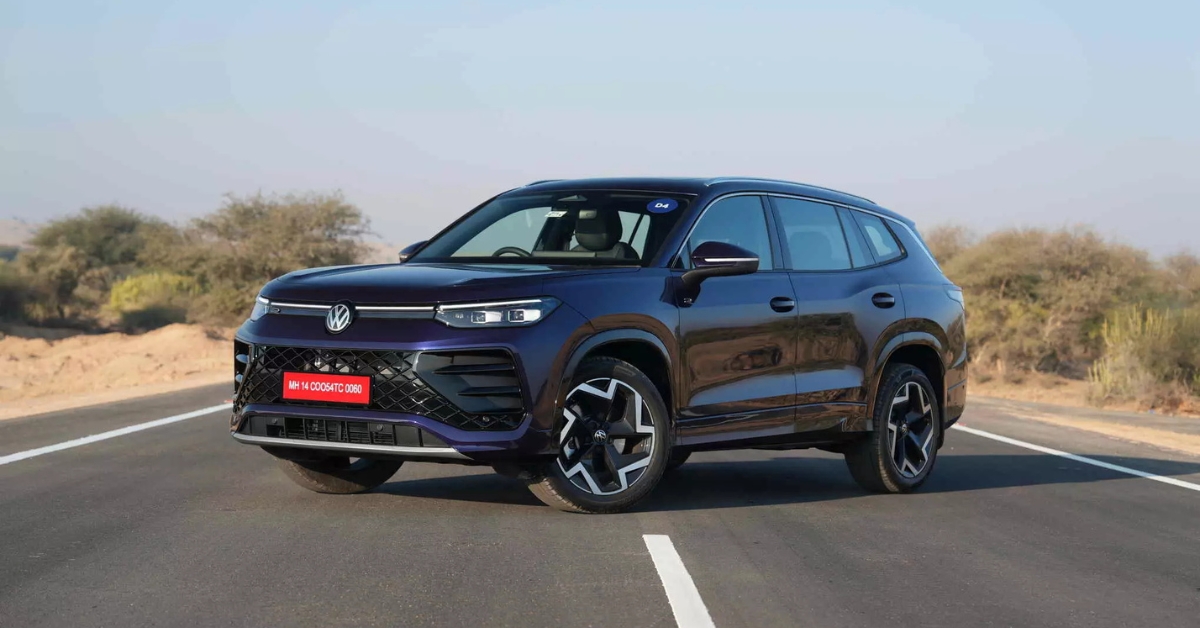
Volkswagen Sales: The worldwide car industry is transforming more rapidly than ever before, and even the world’s largest car companies are being forced to change. Car sales at automaker group Volkswagen (VW) have dropped sharply in the second quarter of this year, the company said. In addition to sluggish sales, the company has announced a major reorganisation of its model range that involves cutting the number of models by almost 50%.
Volkswagen Reports Decline in Global Vehicle Sales
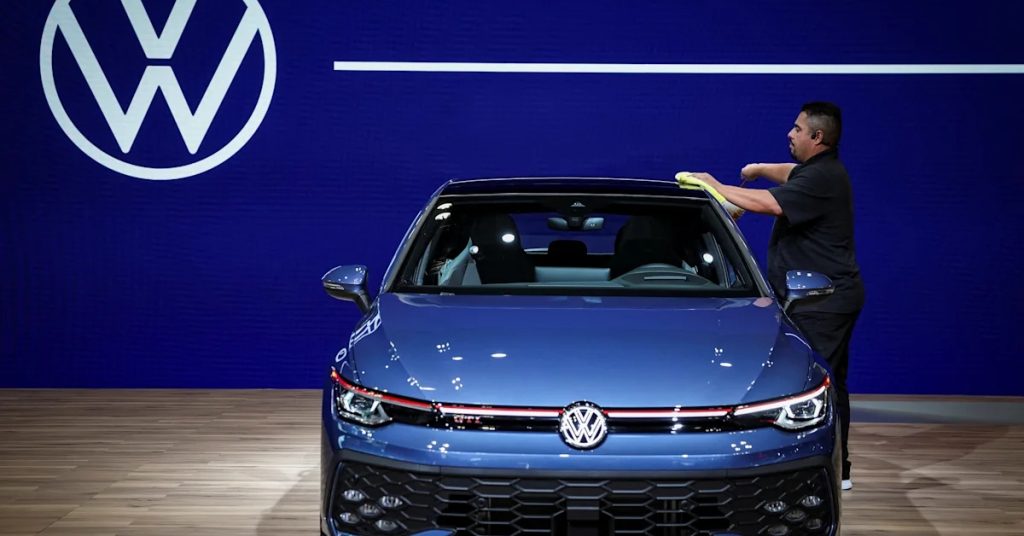
The total sales of the global group fell to just under 2.1 million vehicles in the second quarter, a decrease of 8.6% compared to the same quarter last year, according to the announcement by Volkswagen.
The drop underscores some challenging sales conditions in the automotive marketplace in multiple market segments. However, some markets were found to be stable, whereas the reduced demand in the main markets, particularly China, had a significant influence on the overall performance of the company.
While Volkswagen is still one of the world’s biggest auto manufacturers, the new numbers reveal the challenges facing it in today’s extremely competitive market.
China Remains Volkswagen’s Biggest Challenge
The decline in China, the world’s biggest car market, is one of the reasons for Volkswagen’s poor performance. The company said vehicle deliveries in China dropped over a third from the year-ago figure.
This slowdown has been brought about by several factors. Chinese EV manufacturers have launched many budget-friendly and technologically developed models, gaining the attention of the local market. International brands have found their foothold in the market to be weakened by the competition, frequent new launches and the pricing policy.
Foreign vehicle makers are facing pressure to be flexible and adapt fast as consumers are increasingly looking for locally available EVs to meet their preference.
Volkswagen will cut its model line for 2019
After a recent board meeting, Volkswagen has announced that it has moved to the next stage of its long-term restructuring programme. The company is part of this transformation, and plans to cut at least 50% of its vehicle line.
While Volkswagen doesn’t specify what models might be eliminated, the goal is to streamline its lineup and to eliminate superfluous complexity.
The company aims to optimise the development process, cut production expenses and meet evolving customer needs more rapidly by limiting the number of models.
CEO Outlines a New Strategic Direction
Volkswagen CEO Oliver Blume said the company is striving to get faster, more efficient, and more competitive in a fast-changing auto market.
The company says it has a few key priorities for its future strategy:
- Enhancing the vehicle lineup.
- Investing in key automotive technologies.
- Improving regional market strategies.
- Reducing operational complexity.
- Lowering excess production capacity.
These initiatives are intended to enable Volkswagen to consolidate its position and adjust to the various market conditions in the world.
Lower deliveries are also a branch of Core Brands
The downward trend was not just confined to Volkswagen’s core passenger car business. The sales of several Volkswagen Group brands were also down in the quarter.
This reported performance features:
- The Volkswagen Motorcar brand sold a little more than 1 million cars, down 14% compared with the same period last year.
- In the vehicle segment, Audi made an 8% decline.
- Porsche’s volume of deliveries fell 18% in the same period.
The numbers show that it’s a problem impacting the group’s premium and mass-market brands.
Some Brands Continue to Perform Well
Not all Volkswagen brands are experiencing weaker sales, as the overall downturn is expected to ease in the second half of 2017.
The company’s performance was better than expected in the following areas:
- Lamborghini
- Skoda
- Volkswagen’s commercial truck business
Moreover, VW’s deliveries in Europe and the Americas were positive, offsetting some of the losses in China. This mixed result illustrates the continued high differentials in regional demand in global markets.
Competition in Electric Vehicles Continues to Intensify
The EV segment has emerged as one of the most competitive in the auto industry. The Chinese EV industry remains a hotbed of innovation, with companies rolling out numerous new vehicles equipped with cutting-edge technology, competitive pricing, and cool software features. The developments have hastened the shift toward electric mobility as well as put pressure on the world’s existing vehicle manufacturers.
Volkswagen’s recent decision to return to the Chinese market did not pass for a commitment to the country, as the sales figures show that this growth needs to be achieved through considerable product development, technological and marketing effort.
Analysts Express Cautious Views
Volkswagen has caused a muted response from market analysts with its newest announcements. Research firm Bernstein raised doubts about the company’s assertion of extending its technology leadership, pointing out that there are plenty of Chinese rivals that are still moving ahead with innovation in other sectors like battery technology, vehicle software and connected mobility.
Volkswagen’s restructuring efforts are expected to have a positive impact on the company’s efficiency in the long run, but the success of the company will largely depend on how quickly it can adapt to the changing consumer preferences and increased competition in the global market.
Qatar Investment Authority (QIA) blocks proposed Defence Partnership. The Qatar Investment Authority (QIA) has rejected a proposed Defence Partnership. In another development, it was reported that the Qatar Investment Authority (QIA) has voiced its disapproval of a plan by Volkswagen AG and Israeli defence firm Rafael Advanced Defence Systems to jointly develop Armour, an armour-piercing smart bomb.
The collaboration was said to be to turn one of Volkswagen’s factories into a plant for making military vehicles for a missile defence system, while maintaining hundreds of jobs.
One of Volkswagen’s bigger shareholders, QIA, is said to have exercised its rights to oppose the measure. The investment authority holds over 10% of Volkswagen’s shares and around 17% of the company’s voting rights, which allows the authority to have a significant influence on key company decisions.
What This Means for Volkswagen’s Future
Volkswagen is at a major turning point in its transformation. The company is trying to restore the equilibrium between classic car production and increasing investments in electric mobility, software development and restructuring on the global level. The decision to rationalise its product lineup could result in improved efficiency, while the firm will still have to continue to work on the development of competitive products to satisfy the changing customers’ expectations.
China will continue to be one of Volkswagen’s most significant markets, and the success of their business in the region will probably be based on their ability to provide products that are more competitive with the rapidly evolving domestic EV manufacturers.
The sales performance, though, is a strong indicator of the many problems, but Volkswagen’s global presence, diversity of brands and investment in its future offer the base for a recovery.
Frequently Asked Questions (FAQs)
1. Why did Volkswagen’s global sales decline?
Volkswagen reported lower sales primarily due to a sharp decline in vehicle deliveries in China and increasing competition in the global automotive market.
2. How much did Volkswagen’s global sales fall?
The company reported an 8.6% year-on-year decline in second-quarter global vehicle deliveries.
3. Why is China important for Volkswagen?
China is one of Volkswagen’s largest markets, making changes in consumer demand there highly significant for the company’s global performance.
4. Why is Volkswagen reducing its model lineup?
The company aims to simplify operations, reduce complexity, lower costs, and improve competitiveness by focusing on fewer vehicle models.
5. Which Volkswagen brands experienced lower sales?
Volkswagen Passenger Cars, Audi, and Porsche all reported lower deliveries during the second quarter.
6. Which brands performed better within the Volkswagen Group?
Lamborghini, Skoda, and Volkswagen’s truck business reported stronger sales performance.
7. What challenges does Volkswagen face in China?
The company faces intense competition from Chinese electric vehicle manufacturers that are rapidly introducing new technology and competitively priced models.
8. What is Volkswagen’s long-term strategy?
Volkswagen plans to streamline its model range, invest in key technologies, improve regional strategies, and reduce production complexity to strengthen its global competitiveness.
Disclaimer: This article is based on publicly available reports and official company statements available at the time of writing. Business strategies, sales figures, corporate decisions, and plans may change as new information becomes available. Readers should refer to Volkswagen’s official announcements and financial reports for the latest updates.
Also Read:
BYD eMAX 7 Specifications 2026: 530 Km Range, Battery, Features and Performance
Volkswagen Tayron Specifications, Engine, Features, Top Speed and Boot Space